Whenever bad weather happens, teachers are usually the first to feel the impact of a district’s decision. Whether we’re talking about a traditional snow day or a sudden switch to remote instruction, both situations create real challenges. They directly affect lesson planning, student participation and basic fairness. After experiencing both options, many teachers have developed clear preferences based on their own lived experience.
If families have gone through many remote learning days, their experience of the last day will feel different. But if they have enjoyed traditional snow days, their feelings and memories will be different. That is why the Snow Days vs Remote Learning debate has become a top discussion for schools and families in recent years.
The Bedford School District adopted a new radical policy. According to this policy, after five snow days, learning will continue to maintain continuity and keep the school schedule on track. However, this decision shows that we now prioritize academic calendar integrity more than the spontaneous joy that snow days once brought.
Students today face a different reality than elementary school students of previous generations, where each additional inch of snow simply led to checking whether school was canceled. Research from Government executive across Colorado, Maryland, and Virginia has shown that schools closures creates fewer gaps in learning. Theoretically allowing for higher achievement, but what experience gets eliminated when we implement technology to keep structure in place?
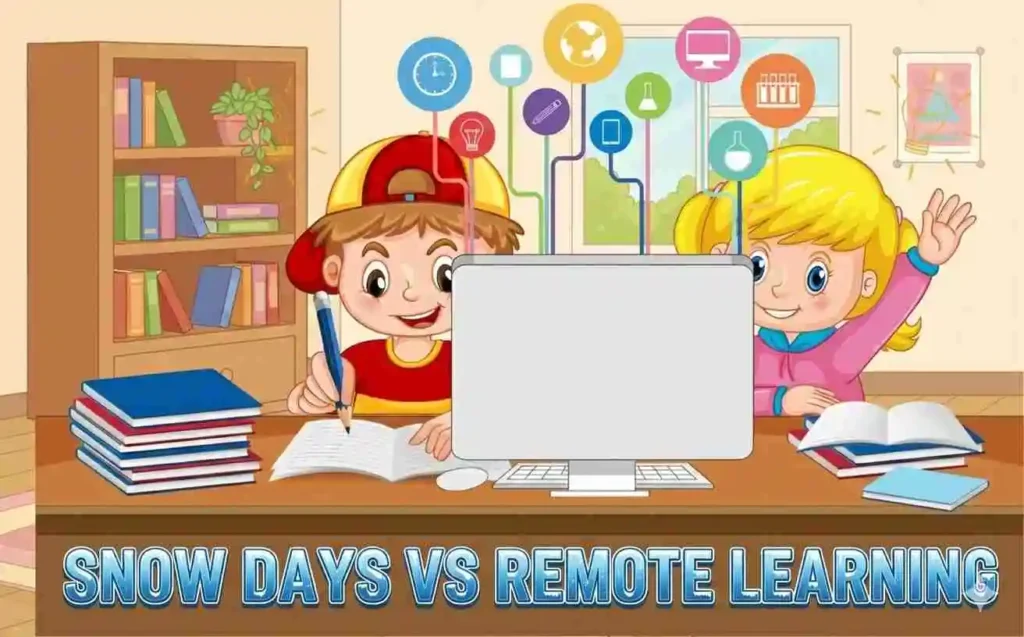
Table of Contents
Snow Days vs Remote Learning: A Teacher Perspective
Looking back at my classroom staff journey, I never imagined the unprecedented times would force me to scramble through creating quality online lessons while my own children wondered why teachers suddenly worked from home. The virtual transition felt chaotic at first—students logging in with slow Internet connections, some families lacking the proper setup, and me desperately trying to ensure every lesson maintained continuity of learning despite the detrimental effects on their social development.
What struck me most was how remote learning days eliminated that spontaneous joy; instead of hearing shouts of excitement about a snow day, kids would stare dejectedly at their screen, wondering if this new type of school day meant learning had become something they didn’t want to engage with, especially when younger children needed constant parents’ supervision to continue their classes while adults juggled their own work responsibilities.
You can also read: What Factors Influence Snow Day Decisions
Advantages of Remote Learning
In the ongoing Snow Days vs Remote Learning debate, distance instruction does offer a few clear benefits for keeping the academic schedule on track.
Continuing Education Safely Beyond the Classroom
When schools suddenly switch to an online format, there’s an undeniable efficiency that emerges—teachers no longer scramble with last-minute filler lesson plans, and the curriculum maintains its momentum without the traditional disruption.
I’ve observed how distance learning has evolved from a niche idea serving those living far away or physically unable to attend traditional classrooms into a sophisticated system that districts can deploy within hours’ warning.
The COVID-19 outbreak fundamentally changed how we approach emergency days, proving that students can complete academic work regardless of weather conditions when communications setup functions properly through smartphone apps that keep every teacher and family on the same page.
Less Stress for Families and School Schedules
What strikes me most is how remote learning days eliminate the anxiety around hitting the required day limit—that persistent concern about whether schools will need to extend into summer because snow kept piling beyond those few built-in buffer days in the schedule.
Parents who work remotely appreciate the ability to supervise their children’s education without the chaos of sudden change of plans, while poorer families, when equipped with needed technology, gain equal learning opportunities rather than facing the digital divide that once excluded them.
Safety Without Sacrificing Instructional Time
The logistical challenges that once made administrators hesitate have dissolved; both teachers and administrators are now prepped and ready for this possibility. Having developed systems during the pandemic that prove virtual schooling can provide quality education.
Instead of avoiding academic progress, students engage with in-person lesson content that’s been adapted for digital delivery, ensuring that every instructional moment contributes to their development rather than sacrificing educational time.
When comparing Snow Days vs Remote Learning, early preparations mean that when forecasters predict dangerous conditions, learning continues safely without sacrificing instructional time. whether that’s one inch, three inches, or six inches accumulating school days can continue virtually without compromising safety. Protecting children from too dangerous road conditions where buses shouldn’t drive, and maintaining educational momentum that serves all students regardless of their family’s circumstances.
Cons of Remote Learning
When looking closely at Snow Days vs Remote Learning, the drawbacks of virtual instruction become very clear for many families.
Snow Days vs Remote Learning: Challenges of Switching to Online Learning
I’ve watched countless families struggle when districts suddenly announced their switch to online learning during weather events, and the reality hits harder than many expect. What sounds like an easier option in theory becomes a logistical nightmare for now every household isn’t equipped with the necessary technology or stable internet to receive quality instruction.
The issue deepens when you realize that not everyone has access to old hardware that actually works, let’s be honest, and poorer families struggle most with these sudden transitions that happen on moment’s notice.
Burden in virtual education
Teachers face their own challenge trying to adapt lessons that were designed for in-person class into something that translates online with very short warning. Often resulting in what amounts to filler content that wouldn’t contribute much to actual curriculum progress.
Are we able to provide the same educational experience when students sit isolated at screens instead of engaging with peers in normal classroom settings? The continuity breaks down immediately, especially for younger learners who need hands-on guidance and can’t self direct through digital platforms effectively.
Unequal Burden of Remote Learning on Households
Perhaps the bigger concern lies in assessment – how do we know if learning objectives are met when work submission becomes optional and participation varies wildly across socioeconomic lines? Has the pandemic taught us that virtual environments create more inequality than they solve, or should we continue down this path?
The burden falls unevenly, with working parents scrambling to supervise remote sessions while managing their own responsibilities, effectively adding unplanned childcare duties to already packed schedules.
When schools make that call to shift online, they’re often not considering whether every household can handle the logistics, whether families have quiet spaces for focused study, or whether internet bandwidth can support multiple devices simultaneously.
Final Words:
If you are curious about how other educators feel about this shift, many educators share their real-world experiences in this [snow days vs remote learning] discussion. After weighing both sides, is replacing traditional snow days with remote sessions truly serving our students, or is it simply a way for administrators to check boxes and avoid scheduling complications? Both sides of this debate deserve serious consideration, but from where I stand, the cons outweigh any perceived benefits when equal opportunity for all children gets sacrificed for administrative convenience. Weather conditions still play a major role in deciding closures, which is why many educators are using our snow day calculator.
Frequently Asked Questions (FAQs)
Q1: Why do teachers like traditional snow days more than online classes?
Ans: Snow days give both students and teachers a real mental break and rest. On the other hand, online classes often cause internet problems and extra stress at home.
Q2: What is the biggest problem with online classes during bad weather?
Ans: The biggest problem is that not every home has good internet or a quiet place to study, which makes it hard for working parents and students who don’t have proper technology.